Written by Megan Meier
The Word
“12 Then they returned to Jerusalem from the mount called Olivet, which is near Jerusalem, a Sabbath day’s journey away.13 And when they had entered, they went up to the upper room, where they were staying, Peter and John and James and Andrew, Philip and Thomas, Bartholomew and Matthew, James the son of Alphaeus and Simon the Zealot and Judas the son of James. 14 All these with one accord were devoting themselves to prayer, together with the women and Mary the mother of Jesus, and his brothers.” Acts 1:12-14 ESV
Reflection
Olivet, or The Mount of Olives was significant to Jesus, it was the place He rested after teaching crowds (Luke 21:37-38), taught His disciples their final lessons (Matthew 24-25, Mark 13), wept over Jerusalem (Luke 19:41-44), begged the Father for another way only if it was in His will (Luke 22:39-44), ascended into Heaven (Acts 1:9), and where He will stand on and split it in two at His Second Coming (Zechariah 14:4). After their encounter with the angels (Acts 1:10-11), the disciples realized Jesus wasn’t coming back that very day and went back to Jerusalem, 0.6-.0.75 miles, or a 15–30 minute walk back. What was going through their minds as they were returning? What were their conversations? Were they discussing their plans of action? Were they reminiscing of all they had seen? If they were silent, were they writing down what happened for future generations or mentally planning what to do next?
In first century Israel, the upper room was a large roof-level area for guests and prayer:
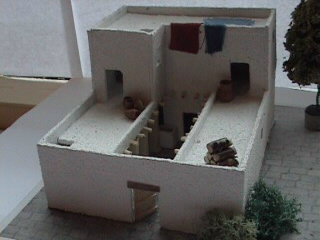
The upper room is not only where the eleven disciples (Judas had died by suicide (Matthew 27:3-5)) were staying, it was also significant to Jesus’ ministry. In the upper room, Jesus had the Last Supper and First Passover with Himself as the Lamb (Luke 22:12-20), set the example of true servanthood (John 13:1-17), and appeared to the disciples behind the locked doors (John 20:19). It must have belonged to a wealthy Christ-follower, as it was large (Luke 22:12) and could keep 120 of them (Acts 1:15). Among the 120 was Mary, Jesus’ mother, Mary Magdalene, Joanna, and Susanna (Luke 8: 1-3). Jesus had sisters (Mark 6:3) and four brothers: James, Joseph, Simon, and Judas (Matthew 13:55). Luke could also be referring to Jesus’ followers as well as the family Jesus was raised with, He said those who do God’s will, or hear God’s word and do it (or shema in Hebrew, meaning to listen with the intent to understand and put into practice), are His brothers and sisters (Matthew 12:48-50, Mark 3:33-35, Luke 8:21). They were actively waiting for the Holy Spirit in Jerusalem as Jesus told them (Luke 24:49, Acts 1:8). During that time, Peter and the apostles instated another to take Judas’ place, one who had witnessed all that Jesus did, from His baptism to His ascension into Heaven (Acts 1:21-26).
Application
The disciples didn’t spend the rest of their lives staring at the sky, they actively waited for the Holy Spirit in the upper room. What about you? Are you staring at the sky or actively waiting? To actively wait means to hear God’s Word and do it. Those who shema God’s Word, those who listen with the intent to understand and put into practice, are Jesus’ brothers and sisters.
Prayer
Lord Jesus, help me actively wait and to shema Your Word. Help me to be strong and courageous while waiting (Psalm 27:14, Isaiah 40:31). In Your Name I pray, amen.
 City Life Starter
Leave a Reply