
Written by Paul Lane

The Word
27 “But I say to you who hear, Love your enemies, do good to those who hate you, 28 bless those who curse you, pray for those who abuse you. 29 To one who strikes you on the cheek, offer the other also, and from one who takes away your cloak do not withhold your tunic [Greek chiton, a long garment worn under the cloak next to the skin] either. 30 Give to everyone who begs from you, and from one who takes away your goods do not demand them back. 31 And as you wish that others would do to you, do so to them.
Luke 6:27-31 ESV
Reflection
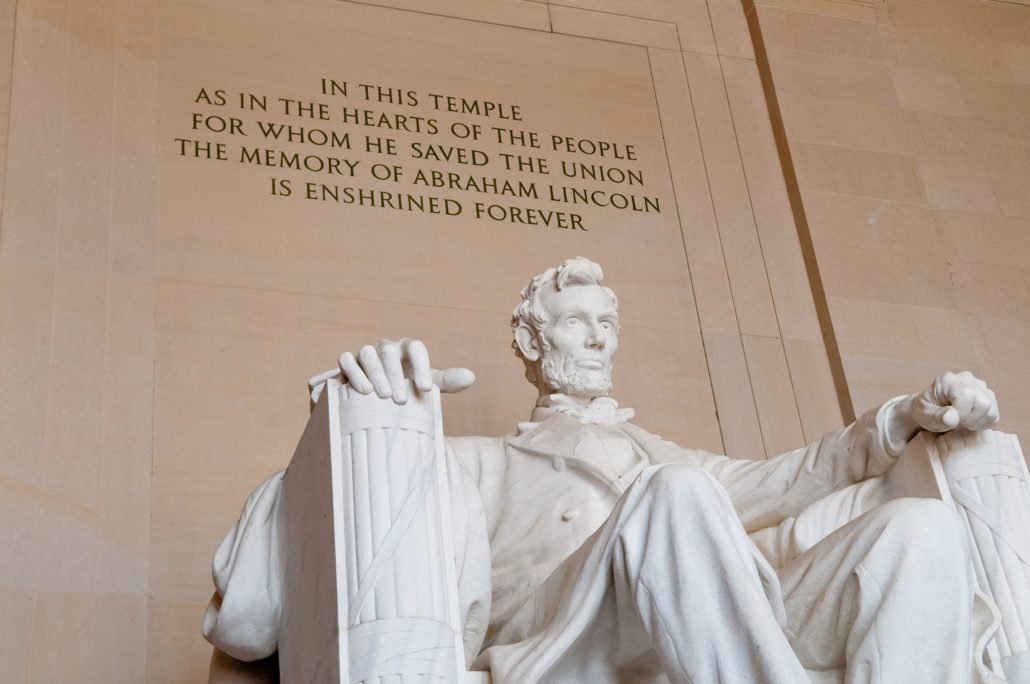
Today I give you what are arguably the two greatest Americans to live. Perhaps when we get to Heaven, we will learn of hundreds more Americans who never made the history books who were greater. But for now, let’s work with what we’ve got, for the greatness of these two individuals is worthy of your attention.
Yes, there are things in their history that have come to light about their misdeeds, mistakes, and shortcomings. But these things are insufficient to take away their greatness. Their greatness is wrapped up in what they did right, despite the cost. They did not take the easy path, and it cost them their lives.
Toward the end of the American civil war, when it was clear that the North was going to win, Abraham Lincoln gave instructions to forgive the South and to let the soldiers return home with their weapons. He also said that they should not be prosecuted for things they did during the war. He had a heart for the South, and a vision for it to be rebuilt and flourishing.
During the Civil Rights campaign, Dr. King was stabbed in the chest with the tip of the blade only a fraction of an inch away from his heart. It was said that if he had sneezed in that situation, it would have pierced his heart, and he would have died on the spot. When he recovered, at his next speech he explained the situation and that he had forgiven the lady who stabbed him.
Both of these are great examples of forgiving enemies who most people would not forgive. But I have a question for you. Where does forgiveness occur, in the heart of the bad actor or in the heart of the person offended? I think we agree that it happens in the heart of the person offended, if it happens at all. So, if forgiveness does not happen, where does the unforgiveness reside? It stands to reason that the unforgiveness would then reside in the heart of the person offended.
Final question: So, who is the most immediate beneficiary of forgiveness? I think you see where I am going here. Forgiveness is a work that occurs in your heart for your benefit. And for you to truly benefit from it, you must trust the Lord to work things out. In the meantime, the Lord’s gift of forgiveness will work a healing in your heart.
Sorry, one more question: Does this mean that it is not right to want to see people who do bad things go to jail or receive punishment? If you want a just and orderly society, I believe that it is still right to want to see laws enforced, innocence protected, and evil doers brought to justice. Allowing God’s work of forgiveness to have free reign in your heart does not take that away.
Application
Take 4 minutes and think of 4 people that you might have some friction with. Say a simple prayer for each of them, and then say, “Lord I release _____ to You and trust You to work in their lives.” If you only believe in this prayer a little bit, it is enough for God to work with.
Prayer
Lord, I pray Your forgiveness, as I do forgive those who have worked against me. I release my foes from the anger and aggression I have stored up in my heart, and I trust You to work Your grace in this situation. Teach me of the love that You have for them, so that I might emulate it. Help me in this task, that I might be faithful to Your call. In all things I pray in Jesus’ name, amen.
 City Life Starter
Leave a Reply