Written by Paul Lane

The Word
26 Then God said, “Let us make man in our image, after our likeness. And let them have dominion over the fish of the sea and over the birds of the heavens and over the livestock and over all the earth and over every creeping thing that creeps on the earth.”
27 So God created man in his own image,
in the image of God he created him;
male and female he created them.28 And God blessed them. And God said to them, “Be fruitful and multiply and fill the earth and subdue it, and have dominion over the fish of the sea and over the birds of the heavens and over every living thing that moves on the earth.”
Genesis 1:26-28 (ESV)
7 The Lord said to Satan, “From where have you come?” Satan answered the Lord and said, “From going to and fro on the earth, and from walking up and down on it.” 8 And the Lord said to Satan, “Have you considered my servant Job, that there is none like him on the earth, a blameless and upright man, who fears God and turns away from evil?”
Job 1:7-8
21 Then I saw a new heaven and a new earth, for the first heaven and the first earth had passed away, and the sea was no more. 2 And I saw the holy city, new Jerusalem, coming down out of heaven from God, prepared as a bride adorned for her husband. 3 And I heard a loud voice from the throne saying, “Behold, the dwelling place of God is with man. He will dwell with them, and they will be his people, and God himself will be with them as their God. 4 He will wipe away every tear from their eyes, and death shall be no more, neither shall there be mourning, nor crying, nor pain anymore, for the former things have passed away.”
Revelation 21:1-4
Reflection
Today’s Bible passages represent the three basic parts of a story. In Genesis 1, God tells us something about the beginning, in this case, our beginning. In Job, we enter the story in the middle of things. And the verses in Revelation tell us about how things are going to end. To tell a story you must be mindful of these three parts. But to tell a good story, the characters in the story must play their parts in such a way that the audience is drawn in, and they forget that the story is being told. The audience must identify with the story and think that they themselves are one of the characters.
In Genesis 1, we are told that God created them, male and female. Having has some experience with males and females, we are able to enter into God’s story of the beginning. What an awesome revelation it is for us when we come to realize that the “them” he is referring to is actually, us. You and me. We are in this story.
If you have ever seen the movie Casa Blanca, you are familiar with the main character played by Humphrey Bogart. But did you pay attention to the Peter Lorre character, Hegarty, the lovable underworld character that only shows up in the beginning scenes? Lorre was famous for the part he played, but he’s only in the movie for a very short time. His role is very similar to the role that Satan plays in Job. He helps the audience get familiar with the main character. He provides information about who the main character is, what his concerns are, and what kind of world he lives in. Once he has done his job, he is quickly taken off the stage. One must not dwell on him, lest one miss the main point of the story.
Both Casa Blanca and Job use the story telling technique called in medias res, which is Latin for “in the midst of things.” This is a very nice technique because one tends not to be able to tell when the beginning ends and the middle starts. If done well, you are hooked into the world and you are no longer listening to the story, you are living in it.
Now the storyteller can weave a tale of fantasy, mystery, or even history. Really good stories wander around a bit, not letting the audience know where things are going, and then, unexpectedly, the hidden meaning of the tale is revealed. In this moment we learn that Darth Vader is really Luke’s father, we learn that the butler did it, or that the brilliant young heart surgeon is really the son of the hospital janitor and heir to the Spanish throne.
Complicated storylines can be fun, but the ones that really last are the ones that reveal something about ourselves. They are the ones that answer, or at least address, the big questions of life. Who am I? Where did I come from? Where am I going? It is often said that Shakespeare never said anything that wasn’t already written in the Bible. If you take his most famous play, Hamlet, you will find that the graveyard scene, that great moment of revelation for the main character, is right in the middle of the story. He comes to realize that his noble birth does not protect him from the thing we all must face. Death. In this, Shakespeare is telling a modern audience of the vanity that King Solomon had written about centuries earlier.
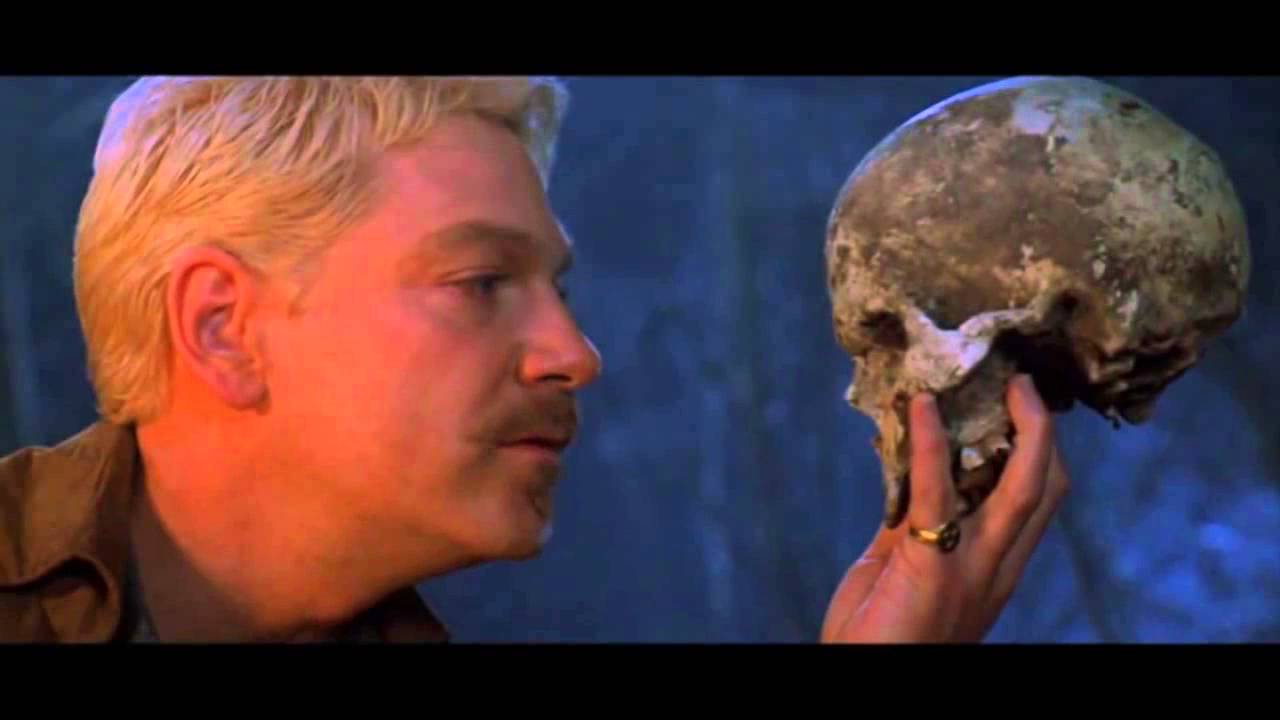
“Alas, poor Yorick! I knew him, Horatio—a fellow of infinite
Hamlet, Act 5, Scene 1, William Shakespeare
jest, of most excellent fancy. He hath bore me on his
back a thousand times, and now how abhorred in
my imagination it is! My gorge rises at it. Here hung
those lips that I have kissed I know not how oft.
Where be your gibes now? your gambols? your
songs? your flashes of merriment that were wont to
set the table on a roar? Not one now to mock your
own grinning? Quite chapfallen?…”
But Hamlet has only discovered the destination of mortal man, and King Solomon was writing about those things that happen “under the Sun.” It is true that we are mortal, and that we have to “live under the Sun,” but we must always remember that that is not all we have.
Application
When God made man, He made us male and female, but He also made us mortal and eternal. One could say that He made us part visible and part invisible.
16 For by him all things were created, in heaven and on earth, visible and invisible, whether thrones or dominions or rulers or authorities—all things were created through him and for him. 17 And he is before all things, and in him all things hold together.
Colossians 1:16-17
So, we have to decide what kind of character we are going to be. Are we to be a bit character, who plays a small part and then is quickly exited from this mortal stage? Or are we going to participate in the main story line, overcome this mortal existence, and live the eternal and unshakable life?
Prayer
Dear Lord, I know that You create all things, and You lead us into Your truth and Your wisdom. I pray that You show me your will, teach me Your ways, and lead me to the life You intend for me. In Jesus name I pray, amen.


 City Life Starter
Leave a Reply